

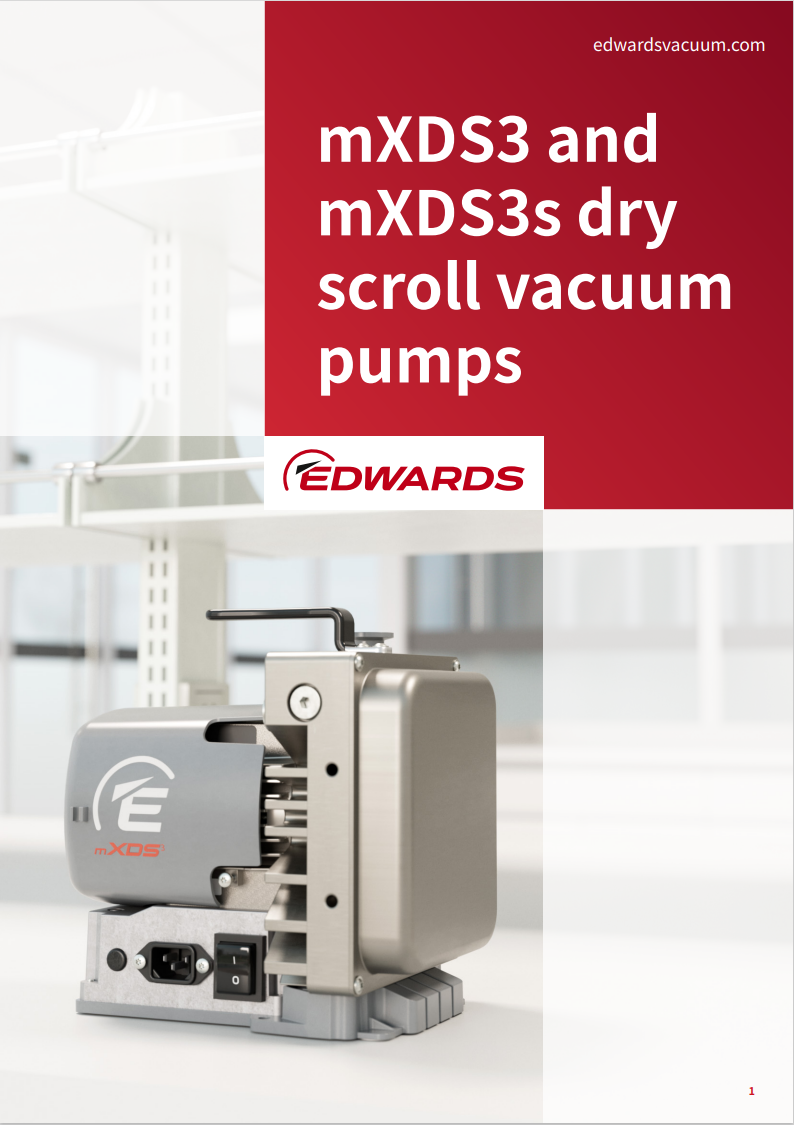
mXDS3 and mXDS3s dry scroll pumps - Digital brochure
The great shape of high performance dry vacuum pumping
Edwards dry scroll pumps offer proven dry, clean vacuum solutions for a wide range of applications.
Scroll pumps are an excellent alternative to rotary vane pumps where oil free pumping is desirable.
mXDS is a small dry alternative to oil sealed rotary vane pumps and diaphragm pumps of a similar capacity delivering 3 m3h-1 peak speed and 0.1 mbar ultimate.
The mXDS is compact and lightweight, weighing in at just under 8kg with a purpose made carry handle making them highly portable.
For system builders the pump can typically be mounted horizontally or vertically and for convenient connection the inlet can be orientated vertically or horizontally with a push fit alternative available as an accessory.
These compact scroll pumps have a gas ballast facility incorporated in the design as standard for water vapour handling and an exhaust valve just like the larger nXDS.
With a typically lower power requirement compared to similar capacity pumps, which makes them great for energy savings and an ideal choice for helping to reduce your carbon footprint.
The optimised fan cooling is beneficial in reducing noise for quieter operation leading to a pleasant working environment, and being clean oil free pumps with no oil to top up, replace or dispose of are an environmentally friendly option.
mXDS3 are offered as standard or configured with a solenoid inlet isolation valve for enhanced system protection and supplied with exhaust silencer/filter accessory to become the mXDS3s.
nXDS is a dry scroll pump offering pumping speeds of 6-20 m3h-1, combined with lower ultimate pressures, lower power consumption and lower noise levels than other pumps.
nXDS pumps are designed to be completely field serviceable.
Its intelligent control functions and up to five years service interval ensures low cost of ownership, making it the small dry pump of choice for today's most advanced technologies.
The onboard pump controller allows for:
Have become industry standard when dry pumping is essential, proving to be a robust and clean vacuum pump solution in a range of applications with pumping speeds up to 40 m3h-1.
From expert repairs to smart service plans, genuine parts, remote diagnostics, and even buyback—our all-in-one vacuum care keeps your systems running at their best.